Pre-Launch Strategy Mistakes to Avoid (with Ash Chow)
You spent weeks (maybe months) building your offer, writing your sales page, and setting up your email sequences. Then you hit “launch,” and the response is… quiet. A handful of clicks, maybe one or two sales, and a whole lot of silence. Sound familiar?
If your launches feel like shouting into the void, the problem probably is not your offer or your sales page. The real issue is what happened (or did not happen) before the cart ever opened. That is your pre-launch strategy, and it is where most creative business owners drop the ball.
In this post, I am breaking down the most common pre-launch strategy mistakes and sharing a proven five-part framework from launch strategist and conversion copywriter Ash Chow that you can apply to your next launch, whether you are selling a digital product, a course, or even a service.
If you want to hear the full conversation, check out this episode of the Systems and Workflow Magic Podcast. And if you are a family photographer looking for a consistent marketing system that stays ahead of these kinds of launch pitfalls, take a look at The Family Photographer’s Marketing Society, where I walk through these strategies with you every month.
🎙️Would you rather listen to this episode via Podcast?
🎥Would you rather watch this episode on YouTube?
🗒️Read the Full Blog Here ⬇️
What Is a Pre-Launch Strategy and Why Does It Matter?
A pre-launch strategy is the intentional content and messaging plan you execute before opening the doors to your offer, designed to get your audience mentally ready to buy.
Most business owners pour all their energy into the open cart period. That makes sense on the surface because the open cart is when sales actually happen. But here is the part that gets overlooked: if your audience is not already in the right frame of mind before you launch, no amount of sales emails or discount codes will change their decision.
Ash Chow explains it this way. At any given moment, your audience is carrying deeply rooted beliefs and objections that prevent them from seeing the value of what you are about to offer. They might think the topic is not relevant to them yet. They might doubt their ability to get results. They might believe they need something else first before they are “ready.”
If you do not address those beliefs before you launch, all of those doubts will flare up the moment they see your sales page. And instead of buying, they will talk themselves out of it.
Your pre-launch phase is where you bridge that gap. It is where you shift what your audience thinks, believes, and feels so that by the time the cart opens, they are already leaning in.
What Are the Biggest Pre-Launch Strategy Mistakes?
The two biggest pre-launch strategy mistakes are treating pre-launch content as generic “value-add” content and confusing hype with strategic preparation.
Mistake #1: Thinking “add value” is a strategy. Yes, your pre-launch content should add value. But “add value” is a vague concept. You can add value by being funny, being relatable, or sharing educational tips. None of those things automatically gets your audience closer to buying. Your pre-launch content needs a specific job: shift your audience’s beliefs so they understand why the topic you are teaching matters to them right now.
Mistake #2: Confusing hype with readiness. Building excitement is great. You want your audience to care that something new is coming. But what is the point of driving traffic to your sales page if they land there and immediately think, “This is not for me” or “I do not think I can do this”? Hype without belief-shifting is just noise.
Mistake #3: Skipping the pre-launch entirely. This one is the most common, especially among solo business owners who are already stretched thin. You have so much to do for the actual launch that the pre-launch gets pushed aside. But skipping it means your audience has to do all the mental heavy lifting during your launch week, and most won’t.
If you have ever launched to crickets, it probably was not because your offer was bad. It was because your audience was not primed.
How Do You Research What Your Audience Really Thinks?
Research your audience’s beliefs and objections by surveying your email list, reading Facebook groups where your ideal clients hang out, and using Reddit as a research tool.
You cannot create effective pre-launch content if you do not know what is going on in your audience’s head. Here is how Ash recommends figuring that out.
Survey your audience directly. Send a short survey to your email list or social media followers, asking questions like: What challenges do you face with [your topic]? What has stopped you from [desired result] so far? If you are a family photographer, you could ask yourself: What keeps you from consistently marketing your business? The answers will reveal the exact beliefs and objections you need to address.
Stalk the right Facebook groups. Find groups where your ideal clients hang out and pay attention to the questions they ask, how they talk about their struggles, and what misconceptions come up repeatedly.
Use Reddit (this is the secret weapon). Ash shared a pro tip that honestly changed how I think about audience research. Instead of using Reddit’s own search bar, go to Google and type your topic followed by “Reddit.” For example: “struggling to market my photography business on Reddit.” Google will surface the most relevant Reddit threads where real people are being brutally honest about their challenges. This is where you find the raw, unfiltered beliefs that your pre-launch content needs to tackle.
If you want a tool that helps you organize all of this audience research into a system, the Backend Organization System is designed for exactly that kind of strategic planning.
What Is the POWER Framework for Pre-Launch Content?
The POWER Framework is a five-part content strategy that helps you prime your audience, overcome objections, walk through your why, establish authority, and reshift beliefs before your launch.
Ash created this framework to give business owners a clear structure for their pre-launch content, rather than creating random posts and hoping for the best. Here is what each letter stands for.
P: Prime Your Audience. Keep your topic top of mind. If you are about to launch a course on blogging for SEO, start talking about the benefits of blogging and why organic visibility matters weeks before the cart opens. Your content during this phase should drum up desire for the result, make them aware of the challenge standing in their way, and seed your unique approach to the solution.
The best part? You can hit all three of those objectives in a single piece of content. For example, you could write an email that shares how your blog brought in 3 new client inquiries last month (desire), then mention that most family photographers struggle with blogging because they lack a content system (challenge), and then introduce your approach to addressing that (solution).
O: Overcome Objections. Every audience has objections, and in the pre-launch phase, you are tackling objections about the topic itself, not the price or the time commitment of your product. For family photographers, a common objection to marketing systems is: “I am a creative person. Systems feel restrictive.” Your job during the pre-launch is to flip that belief. You could share how building a marketing system actually gave you more creative freedom because you stopped scrambling for what to post every week.
W: Walk Through Your Why. Share why you created your offer and what gap it fills. This is where you let your audience connect with your mission. What inspired you to build this product? What problem were you seeing over and over again that made you think, “Someone needs to create a real solution for this”?
E: Establish Your Expertise. Use testimonials, case studies, and your own results to show that your approach works. This is not about bragging. It is about giving your audience the confidence that they are learning from someone who has done the work. If you have booked photography clients directly through your blog, share that story. If a student in your marketing membership implemented your system and saw results, share their win.
R: Reshift Beliefs. This is the thread that runs through the entire framework. You are helping your audience move from limiting beliefs to empowering ones. From “I am too creative for systems” to “Systems are what give creative people more space to do creative work.” From “It is too late to start blogging” to “Every blog post you publish works for you for years to come.”
If you want the full breakdown of the POWER Framework, Ash offers a free guide on her website that walks you through applying it step by step.
What Is the Difference Between Pre-Launch Content and Launch Content?
Pre-launch content sells the idea behind your offer and shifts beliefs, while launch content sells the offer itself and handles purchase-related objections.
This distinction trips up a lot of business owners, and it is one of the most important things to understand if you want your launches to convert. Here are the three key differences.
1. The purpose is different. During the launch, your purpose is to make sales and keep your product top of mind. During the pre-launch, your purpose is to get your audience into the right state of mind to even consider buying.
2. The objections you tackle are different. During the launch, you handle objections like “this costs too much” or “I do not have time for a course.” During the pre-launch, you handle objections like “I do not think I need this” or “I do not believe this approach will work for me.” See the difference? One is about the product. The other is about the topic.
3. The call to action is different. During the launch, the CTA is “buy now” or “enroll today.” During the pre-launch, the CTA should be softer: join the waitlist, reply to this email, reflect on this question, or save this post for later.
Getting this wrong is why so many business owners feel like they are “always selling” but never converting. If you jump straight to “buy my thing” without laying the belief groundwork first, your audience has too many unresolved doubts to say yes.
Can You Use a Pre-Launch Strategy for Services (Not Just Digital Products)?
Yes. The POWER Framework works for service-based businesses and can help you fill your client calendar consistently, rather than ride the feast-or-famine cycle.
If you are a family photographer, you probably know the feast-or-famine pattern all too well. Fall mini sessions are booked out, and then January feels like a ghost town. But what if you started priming your audience two to three months before your slower season? What if your content during your busiest months was already planting seeds for spring bookings?
Ash confirmed that she has applied the POWER Framework to service-based businesses with great results. The principles are the same. You identify the ideal state of mind your prospective client needs to book with you, identify which beliefs are currently in the way, and create content that bridges the gap.
For family photographers, the ideal state of mind might look like: “Documenting my family right now matters, even if my kids are in that messy toddler stage.” The current belief might be: “We will book a photographer when the kids are a little older and can sit still.” Your pre-launch content shifts that belief by sharing real session galleries of families with toddlers, by highlighting how quickly this stage goes, and by showing that the “messy” moments are the ones families treasure most.
If you want a system that keeps your marketing consistent so you are always warming up your audience (not just during launch season), The Family Photographer’s Marketing Society gives you a done-for-you weekly marketing plan built around exactly this kind of strategic content.
How to Start Building Your Pre-Launch Strategy Today
You do not need a fancy launch plan or a huge audience to start implementing a pre-launch strategy. Here is a simple starting point you can use right now.
Step 1: Pick one offer or service you plan to promote in the next 60 to 90 days. This could be a digital product, a course, mini sessions, or a service package.
Step 2: List 3 to 5 beliefs your audience currently holds that would stop them from buying. Use the Reddit and Facebook group research method Ash described. Write down the exact language your audience uses. If you are a photographer reading this, go into Facebook photography groups or even your local mom groups that discuss photography.
Step 3: For each belief, draft one piece of content that addresses it. This could be a blog post, an email, an Instagram caption, or a podcast episode. Each piece should acknowledge the belief, explain why it exists, and offer a new perspective.
Step 4: Map those content pieces across a timeline leading up to your launch. Start sharing them 4 to 8 weeks before your cart opens. If you are promoting a service year-round, rotate through these belief-shifting topics as part of your ongoing marketing rhythm.
Step 5: Set up a waitlist or interest page to capture people who are warming up to the idea. This gives you a direct line to your most interested audience on launch day.
If you want help building this kind of marketing system from scratch, The Blogging and Organic Visibility System is designed for family photographers who want a repeatable content system that does the heavy lifting for them.
Frequently Asked Questions About Pre-Launch Strategy
How long should a pre-launch phase be? The length depends on your audience size and the complexity of your offer. Large course creators like Amy Porterfield start their pre-launch two to three months out. If you have a smaller audience, even one to two weeks of intentional belief-shifting content can make a real difference in your launch results.
What if I do not have a large email list to survey? Use public platforms like Reddit and Facebook groups to research your audience’s beliefs and objections. You do not need your own large audience to gather this data. You just need to find where your ideal clients are already talking about their challenges.
Is pre-launch content the same as a sales funnel? Not exactly. A sales funnel is the technical sequence (opt-in, nurture emails, sales page, checkout). Your pre-launch strategy is the content and messaging approach that warms up your audience before they even enter the funnel. Think of it as the work that makes your funnel actually convert.
Can I apply this to something I sell year-round? Yes. The POWER Framework is not only for one-time launches. You can weave these five elements into your ongoing marketing to continuously prime new audience members, especially if you sell evergreen products or book services on a rolling basis.
What is the biggest mistake people make with pre-launch content? Creating content that is generically “valuable” but does not specifically address the beliefs and objections standing between your audience and your offer. Your pre-launch content needs a targeted job: shift what your audience thinks and feels about the topic you teach.
DID YOU LIKE THIS EPISODE? PLEASE SHARE IT ON PINTEREST!
Meet Your Favorite Marketing Strategist and Business Coach for Family Photographers (Dolly DeLong Education)

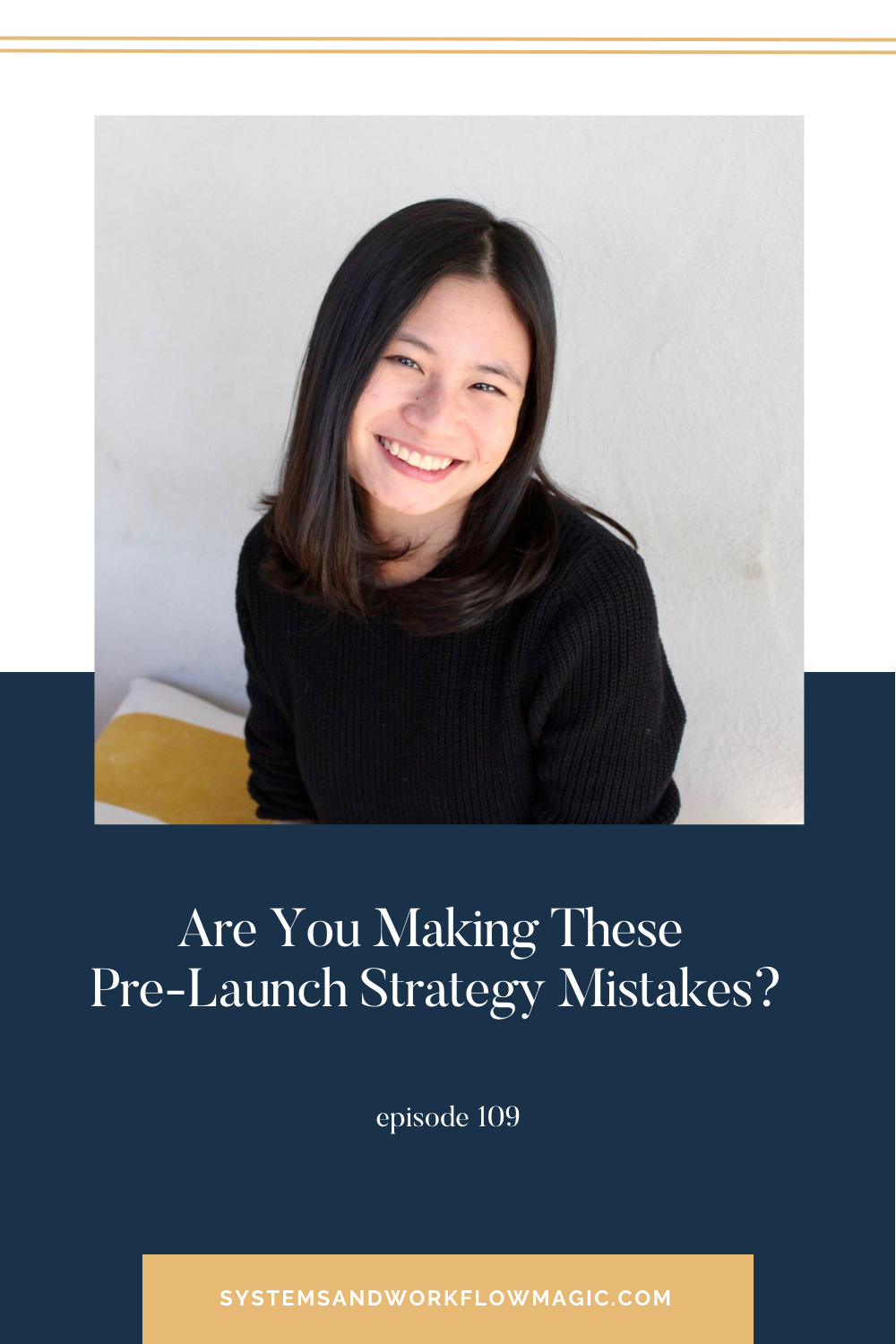
Hi, I’m Dolly DeLong, a Nashville-based family photographer, marketing strategist, and systems educator for family photographers who want structure, clarity, and consistency in their marketing.
My photography journey began in 2006, and over the years, I built a sustainable family photography business while navigating motherhood, client work, and the realities of running a solo creative business. Along the way, I discovered something unexpected: I loved the backend just as much as the creative side.
What started as organizing my own workflows turned into helping other family photographers simplify their marketing, build repeatable systems, and stop relying on last-minute posting or panic marketing.
Today, I focus exclusively on helping family photographers intentionally market their businesses (not with trends but with consistently showing up).
I offer two ways to work with me:
-
The Family Photographer’s Marketing Society: a systems-first membership that provides a clear weekly marketing cadence for Instagram and email, so you always know what to focus on without starting over.
-
1:1 Strategic Marketing Support for established family photographers who want hands-on guidance in building a sustainable, SEO-supported marketing system.
Through my blog, podcast, and YouTube channel, I teach family photographers how to think like marketers, plan ahead, and create marketing rhythms that support both their business and their family life.
I still photograph families around Nashville because it’s one of my greatest joys. But helping family photographers build calm, consistent marketing systems that actually fit real life is a close second.
I’m so glad you are here, reading this blog, listening to the podcast, or watching the embedded YouTube video. I hope this educational content was helpful. Please let me know what future systems content you would like me to create!
more on me • more on me

More about dolly
Hi, I’m Dolly — a family photographer, marketing strategist, and systems & workflow educator for family photographers who want to find joy (and order) in their business again. Because I still work behind the camera, I understand firsthand how overwhelming the backend of a creative business can feel.
With my launch-strategist brain and a deep love for simple systems, I help photographers build intentional marketing rhythms and workflows that make it easier to show up consistently, attract the right clients, and actually enjoy running (and marketing) their business.
Through my blog, podcast, and YouTube education, I share actionable steps, real talk, and encouragement — all rooted in faith and intention — to help you bring clarity and confidence to your marketing and everyday systems. Because sustainable growth isn’t built on hustle or speed, but on thoughtful planning, consistency, and care.
part cheerleader. part systems guide.
But all dolly.
I'm Dolly

Watch now
This training covers the elements you should include in your photography business contact form.
How to create a contact page that WOWS & converts
no 03. | free training

Download now
Access my exact checklist I use to create my mini sessions every year in Dubsado
The Dubsado
Mini-Session Master Workflow Checklist
no 02. | DOWNLOAD

Get the free guiide
These evergreen posts build confident & consistent marketing
5 Instagram posts every family photographer should be sharing
no 01. | download