SEO Strategy for Service Providers (Episode 146 with Laurel Vines)
*This blog post is based on Episode 146 of the Systems and Workflow Magic Podcast, originally recorded during the Summer of SEO series. While some specific promotions mentioned in the episode may no longer be active, the SEO strategies shared here remain relevant and have been updated with the current context for the present day.
If you have been putting off your SEO strategy because it feels like one more thing on your never-ending to-do list, you are not alone. Most service providers (especially family photographers) know SEO matters, but they get stuck trying to figure out where to actually start. And that stuckness? It leads to months of relying solely on social media to get clients, a recipe for burnout and inconsistency.
In this post, I am breaking down a practical, step-by-step approach to planning your SEO strategy as a service provider, based on my conversation with brand designer, SEO strategist, and Showit web designer Laurel Vines on the Systems and Workflow Magic Podcast. Whether you are a family photographer, a designer, a copywriter, or any other creative service provider, this post will give you a clear path to follow.
And if you want to go even deeper into blogging and organic visibility, check out The Blogging and Organic Visibility System for Family Photographers, my step-by-step digital product that walks you through the entire process.
What Makes Up a Good SEO Strategy for Service Providers?
A strong SEO strategy for service providers includes six core components: content, website structure, keywords, user experience, page speed, and off-page SEO.
Let me break each of these down so you can see exactly what to prioritize.
Content is the most obvious piece. Your blog posts, your service page copy, your about page, and even your podcast show notes all count as content that Google can read and index. If you are not creating content on a regular basis, Google does not have much to work with when deciding whether to recommend your website to searchers.
Website structure is the technical side of things. How your site is built, the code behind it, and how Google crawls your pages all play a role in whether you show up in search results. You do not have to be a developer to care about this, but you do need a website platform and a designer who understands it. (This is one reason I recommend Showit for photographers and creatives.)
Keywords tie directly into your content. These are the actual words and phrases your potential clients type into Google when they are looking for someone like you. Using the right keywords in the right places is one of the fastest wins you can get with SEO.
User experience matters more than most people realize. If visitors land on your site and the text is too small, the colors make it hard to read, the navigation is confusing, or a link dumps them on a 404 error page, Google notices. A bad user experience signals to Google that your site is not worth recommending.
Page speed is another factor Google considers when ranking your site. If your pages take more than a couple of seconds to load, most people will leave before they even see your content. Fast-loading pages keep visitors on your site longer and give you a better shot at ranking.
Off-page SEO is the piece most service providers skip entirely, and it is one of the most important. Off-page SEO refers to other reputable websites linking back to yours (called backlinks). When another site links to you, it is essentially telling Google, “This person is worth paying attention to.” The more quality backlinks you have, the more trustworthy your website appears to search engines.
Why Should Service Providers Care About Off-Page SEO?
Off-page SEO builds your website’s authority and trustworthiness in Google’s eyes, which directly impacts how well your pages rank in search results.
Most photographers and creatives focus almost exclusively on on-page SEO: writing blog posts, choosing keywords, and optimizing their service pages. And those things absolutely matter. But if you stop there, you are leaving a huge part of the SEO equation on the table.
Think of it this way: your on-page SEO tells Google what your site is about. Your off-page SEO tells Google that other people trust your site. Both signals work together to help you show up in search results.
Here are a few practical ways to start building backlinks:
- Guest podcasting is one of the most natural ways to earn backlinks. When you appear on someone’s podcast, they typically link to your website in their show notes. That is a backlink from a reputable source, and it happens while you are doing something you probably enjoy: talking about your work.
- Guest blog posting works the same way. Reach out to other business owners in your niche and offer to write a blog post for their site. You get a backlink, they get free content, and both of your audiences benefit.
- Local and industry directories are an often-overlooked goldmine. Your city or region may have a local business directory, and there are plenty of photography-specific and creative-industry directories online. Getting listed on these sites gives Google another signal that your business is legitimate and relevant.
- Pitching your content to existing ranking posts is a strategy Laurel recommended that feels a little bold but works. Find blog posts that already rank well on Google for topics related to your work. If you would be a good addition to their list or resource roundup, reach out and ask. People do this all the time, and you might be surprised how often the answer is yes.
If you are looking for a system to keep your SEO and marketing efforts organized, the Backend Organization System for Family Photographers is a $7 Trello board that gives you a central hub for tracking all of this.
How Do You Choose Strategic Keywords for Your Website?
Start by assigning one unique focus keyword to each core page on your website, then use blog posts to answer specific questions your ideal clients are searching for.
Laurel shared a strategy in our conversation that I think is worth repeating because so many service providers get this wrong. When you are planning your website’s keyword strategy, you want to create a website map first. List out your core pages: Home, About, Services, any digital product or sales pages, and your Contact page.
Then, choose one focus keyword per page. This is the keyword you want that specific page to rank for. For example, if you have a page about your family photography services, your focus keyword might be “Nashville family photographer” (or whatever your location and service combination looks like).
Here is the important part: do not use the same focus keyword on two different pages. When two of your own pages compete for the same keyword, Google gets confused about which one to rank. Laurel called this “keyword cannibalization,” and it is one of the most common SEO mistakes service providers make without realizing it.
Your focus keyword should appear in three specific places on each page:
- Your SEO title (the title that shows up in Google search results)
- Your meta description (the short summary below the title in search results)
- Your H1 heading (the main heading visitors see on the page itself)
You can absolutely use related keywords throughout the rest of the page. Just make sure those three spots are reserved for your primary focus keyword.
For blog posts, the approach is a little different. Instead of describing a service, your blog posts should answer questions your ideal clients are searching for. A tool like Answer the Public (free for up to five daily searches) lets you type in a topic and see all the questions people are asking about it. Each of those questions is a potential blog post.
If you want a full system for planning your blog content and keywords, The Blogging and Organic Visibility System walks you through every step, from keyword research to publishing and repurposing.
How Can Pinterest Help Your SEO Strategy?
Pinterest functions as a visual search engine, and using strategic keywords on your Pinterest content can drive long-term organic traffic to your website.
If you have been treating Pinterest like just another social media platform, it is time to shift your thinking. Pinterest is a search engine, and it operates on SEO principles very similar to Google. When you optimize your pins with the right keywords, they can show up in Pinterest search results for months or even years.
Here is how Laurel recommends approaching Pinterest keyword research:
Start with your content pillars. What are the main topics you blog about or create content around? For most family photographers, this might include things like family photo session tips, what to wear for family photos, location ideas, and behind-the-scenes business content.
Search those topics directly on Pinterest. When you type a search term into Pinterest, you will see colored bubbles at the top of the results. Those bubbles are long-tail keyword suggestions straight from Pinterest, showing you exactly what users are searching for within that broader topic.
Lean into the long-tail keywords. Instead of trying to rank for a broad term like “family photography,” use more specific phrases like “fall family photo outfit ideas” or “Nashville outdoor family session locations.” These long-tail keywords have less competition and attract the exact type of person you want to reach.
One thing Laurel clarified that I found interesting: unlike Google, your past Pinterest search history does not affect the suggested search terms that appear. So you can do your keyword research right from your own Pinterest profile without worrying about skewed results.
I can tell you from personal experience that Pinterest works. One of my best recurring photography clients originally found me through Pinterest, and they have come back for family photos every year since. That is the power of SEO-driven content on a platform that rewards it.
If you want to see how I use Pinterest alongside blogging and other organic marketing channels, the Family Photographers Marketing Trends Report is a free resource I update every year that covers what is working now.
What About Local SEO for Photographers and Service Providers?
Setting up and optimizing your Google Business Profile is one of the most impactful local SEO steps you can take, even if your services are not exclusively local.
If you serve clients in a specific geographic area (and most family photographers do), local SEO should be a non-negotiable part of your strategy. When someone searches “family photographer near me” or “newborn photographer in [your city],” your Google Business Profile is what shows up in those local map results.
Even if you also offer online services (like coaching, education, or digital products), having a Google Business Profile gives you an extra layer of trust and visibility. People often search locally first, even for services they could technically hire from anywhere. That local connection builds confidence.
Beyond your Google Business Profile, Laurel recommends weaving location-based keywords into your blogging strategy. If you are a family photographer, write blog posts about the venues and locations where you shoot. Posts like “Best Locations for Family Photos in [Your City]” or “Why [Specific Park] is Perfect for Fall Family Sessions” help you show up when local families are searching for exactly what you offer.
What Is the Best Way to Start Planning Your SEO Right Now?
Pick one area from this post, whether it is mapping your website keywords, writing your first SEO blog post, or setting up your Google Business Profile, and take action on it this week.
SEO is not an overnight win. It is a long game, and the sooner you start laying the foundation, the sooner you will start seeing results. The photographers and service providers who invest in SEO now are the ones who will wake up to organic inquiries six months, a year, or two years from now without having to chase every new social media trend.
If you are looking for structured support to build your marketing systems (including SEO, email, and content strategy), the Family Photographer’s Marketing Society is my monthly membership designed for exactly this. Inside, you get weekly marketing plans, templates, and community support so you never have to figure out “what should I post this week?” alone.
And for the business tools I personally use and recommend for running your photography business (including my affiliate links for Dubsado, Flodesk, and Showit), check out my Business Tools page.
Frequently Asked Questions About SEO Strategy for Service Providers
What is the most important part of SEO for a service provider? Content and keywords are the foundation. Creating consistent, keyword-rich content (especially blog posts) gives Google something to index and rank. Without content, there is nothing for search engines to recommend to potential clients.
How long does it take for SEO to work? Most service providers start seeing measurable results from consistent SEO efforts within three to six months. SEO is a compounding strategy, meaning the more content you create and the longer it has been live, the stronger your results become over time.
What is keyword cannibalization and how do I avoid it? Keyword cannibalization happens when two or more pages on your own website target the same focus keyword. This confuses Google about which page to rank, and both pages can end up performing poorly. Avoid it by assigning one unique focus keyword per page and keeping your SEO titles, meta descriptions, and H1 headings distinct.
Do I need to hire an SEO expert, or can I do it myself? You can absolutely start doing SEO yourself, especially with a good system in place. Tools like Answer the Public for keyword research and a clear website map for keyword planning will get you far. If you want professional help with your website build, look for a designer who understands both design and SEO (like a Showit designer who builds with SEO in mind).
Is Pinterest really useful for SEO? Yes. Pinterest functions as a visual search engine, and pins can drive traffic to your website for months or even years after you publish them. Using strategic long-tail keywords on your pins and boards can generate consistent organic traffic alongside your Google SEO efforts.
DID YOU LIKE THIS EPISODE? PLEASE SHARE IT ON PINTEREST!
Meet Your Favorite Marketing Strategist and Business Coach for Family Photographers (Dolly DeLong Education)

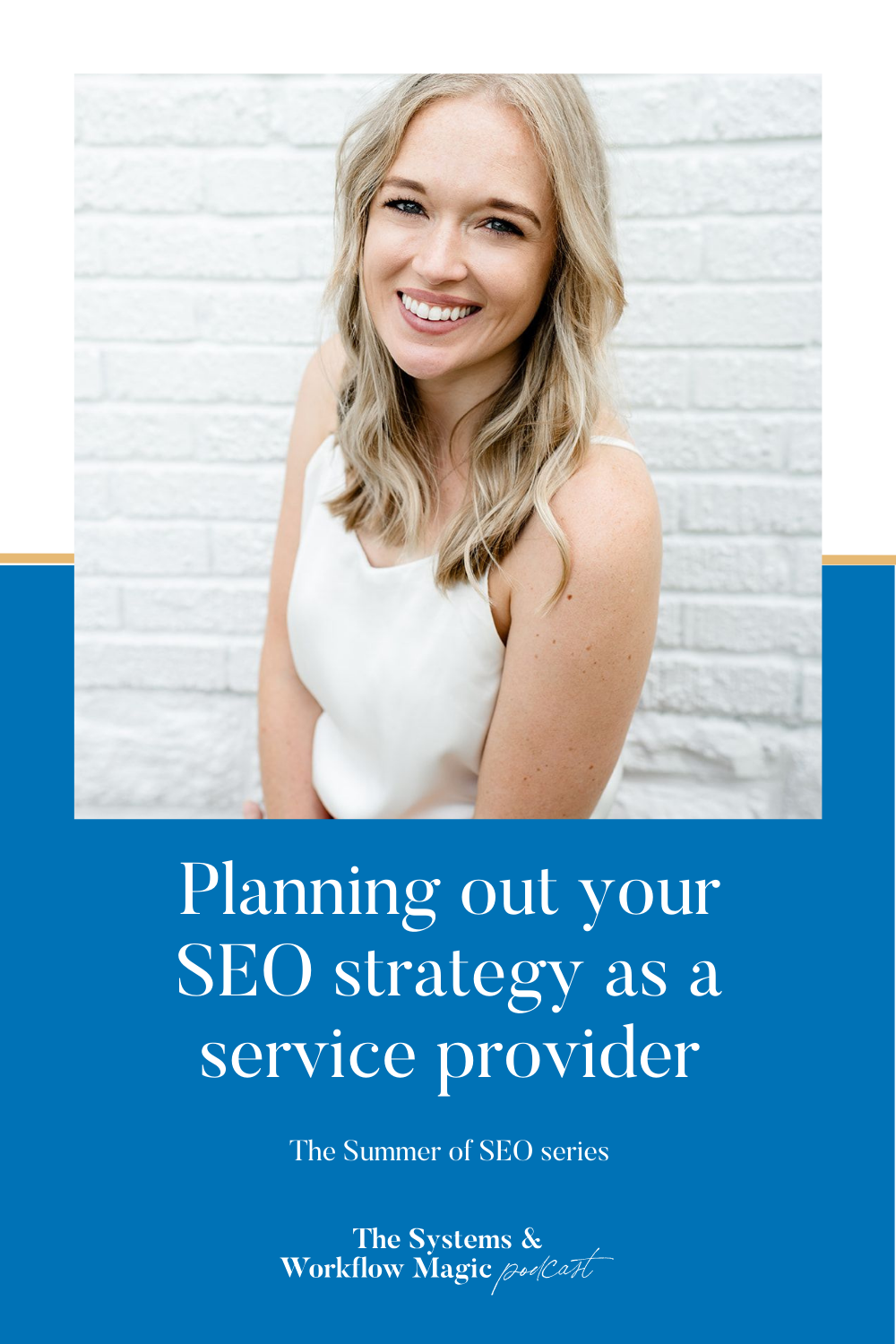
Hi, I’m Dolly DeLong, a Nashville-based family photographer, marketing strategist, and systems educator for family photographers who want structure, clarity, and consistency in their marketing.
My photography journey began in 2006, and over the years, I built a sustainable family photography business while navigating motherhood, client work, and the realities of running a solo creative business. Along the way, I discovered something unexpected: I loved the backend just as much as the creative side.
What started as organizing my own workflows turned into helping other family photographers simplify their marketing, build repeatable systems, and stop relying on last-minute posting or panic marketing.
Today, I focus exclusively on helping family photographers intentionally market their businesses (not with trends but with consistently showing up).
I offer two ways to work with me:
-
The Family Photographer’s Marketing Society: a systems-first membership that provides a clear weekly marketing cadence for Instagram and email, so you always know what to focus on without starting over.
-
1:1 Strategic Marketing Support for established family photographers who want hands-on guidance in building a sustainable, SEO-supported marketing system.
Through my blog, podcast, and YouTube channel, I teach family photographers how to think like marketers, plan ahead, and create marketing rhythms that support both their business and their family life.
I still photograph families around Nashville because it’s one of my greatest joys. But helping family photographers build calm, consistent marketing systems that actually fit real life is a close second.
I’m so glad you are here, reading this blog, listening to the podcast, or watching the embedded YouTube video. I hope this educational content was helpful. Please let me know what future systems content you would like me to create.
more on me • more on me

More about dolly
Hi, I’m Dolly — a family photographer, marketing strategist, and systems & workflow educator for family photographers who want to find joy (and order) in their business again. Because I still work behind the camera, I understand firsthand how overwhelming the backend of a creative business can feel.
With my launch-strategist brain and a deep love for simple systems, I help photographers build intentional marketing rhythms and workflows that make it easier to show up consistently, attract the right clients, and actually enjoy running (and marketing) their business.
Through my blog, podcast, and YouTube education, I share actionable steps, real talk, and encouragement — all rooted in faith and intention — to help you bring clarity and confidence to your marketing and everyday systems. Because sustainable growth isn’t built on hustle or speed, but on thoughtful planning, consistency, and care.
part cheerleader. part systems guide.
But all dolly.
I'm Dolly

Watch now
This training covers the elements you should include in your photography business contact form.
How to create a contact page that WOWS & converts
no 03. | free training

Download now
Access my exact checklist I use to create my mini sessions every year in Dubsado
The Dubsado
Mini-Session Master Workflow Checklist
no 02. | DOWNLOAD

Get the free guiide
These evergreen posts build confident & consistent marketing
5 Instagram posts every family photographer should be sharing
no 01. | download