Digital Product Launch Management Tips Episode 115 Of The Systems & Workflow Magic Podcast
(Dated Disclaimer: This blog post was originally published alongside Episode 115 of the Systems and Workflow Magic Podcast featuring Brooke Scott. It has been updated and rewritten for SEO and current best practices.)
You have an idea for a digital product, a course, or a new service. You know your audience needs it. But every time you sit down to plan the launch, you end up staring at a blank screen, juggling 47 browser tabs, and wondering where to even start.
That scattered feeling is not a character flaw. It is the result of not having a structured launch plan in place before you hit “go.” And if you are a solo family photographer trying to add a digital offer to your business while still shooting sessions and managing client galleries, the overwhelm is real.
In this post, you will get a four-step launch management plan pulled from my conversation with Brooke Scott, an Operations and Integration Specialist with an MBA and lean process training. Brooke has managed launches for advertising agencies, coaches, and creative service providers, and she brought serious strategy to Episode 115 of the Systems and Workflow Magic Podcast. These steps work whether you are launching a mini course, a Trello template, a membership, or a seasonal mini-session guide.
If you want a done-for-you system for staying visible and booking consistently between launches, check out The Family Photographer’s Marketing Society, my monthly membership with weekly marketing plans built for photographers like you.
🎙️To Listen To This Podcast Episode Click Here ⬇️
Want a blog version of this podcast? Here ya go ⬇️
Why Do Most Digital Product Launches Feel So Chaotic?
Most digital product launches feel chaotic because photographers skip the planning phase and jump straight into building sales pages, writing emails, and posting on social media without a clear sequence or timeline.
Here is the pattern I see constantly with family photographers who want to sell something digital. They get excited about the offer. They start creating it. Then they realize they need a sales page, an email sequence, a checkout system, and a way to deliver the product, all at the same time. The result? A messy, last-minute scramble that leaves them exhausted and underwhelmed by their sales numbers.
Brooke Scott put it perfectly during our conversation: the fix is not more hustle. The fix is reverse engineering your launch so every single step has a purpose and a place on the calendar. That concept alone changes everything about how you approach selling digital products as a solo business owner.
How Do You Reverse Engineer a Digital Product Launch Timeline?
You reverse engineer a launch timeline by starting with your cart close date and working backward through every milestone, assigning each task a realistic deadline based on your actual capacity.
Step 1: Set your launch date. Pick the day your cart opens and the day it closes. Write those dates down before you do anything else.
Step 2: Define your goals. Brooke recommends setting three tiers of goals: good, better, and best. Your “good” goal might be 10 sales. Your “better” goal might be 20. Your “best” goal might be 30 with a waitlist for the next round. Having tiered goals keeps you grounded and gives you something to measure against.
Step 3: Break down the key phases. Map out your pre-launch content window, your open cart period, your follow-up sequences, and your post-launch wrap-up. Each phase gets its own mini checklist.
Step 4: Ask “why” five times. This is a lean methodology Brooke uses from her MBA training. For every action in your launch plan, ask yourself why you are doing it. Keep asking until you reach the root reason. If you cannot justify a step, cut it. This keeps your launch lean and focused, rather than bloated with tasks that do not move the needle toward sales.
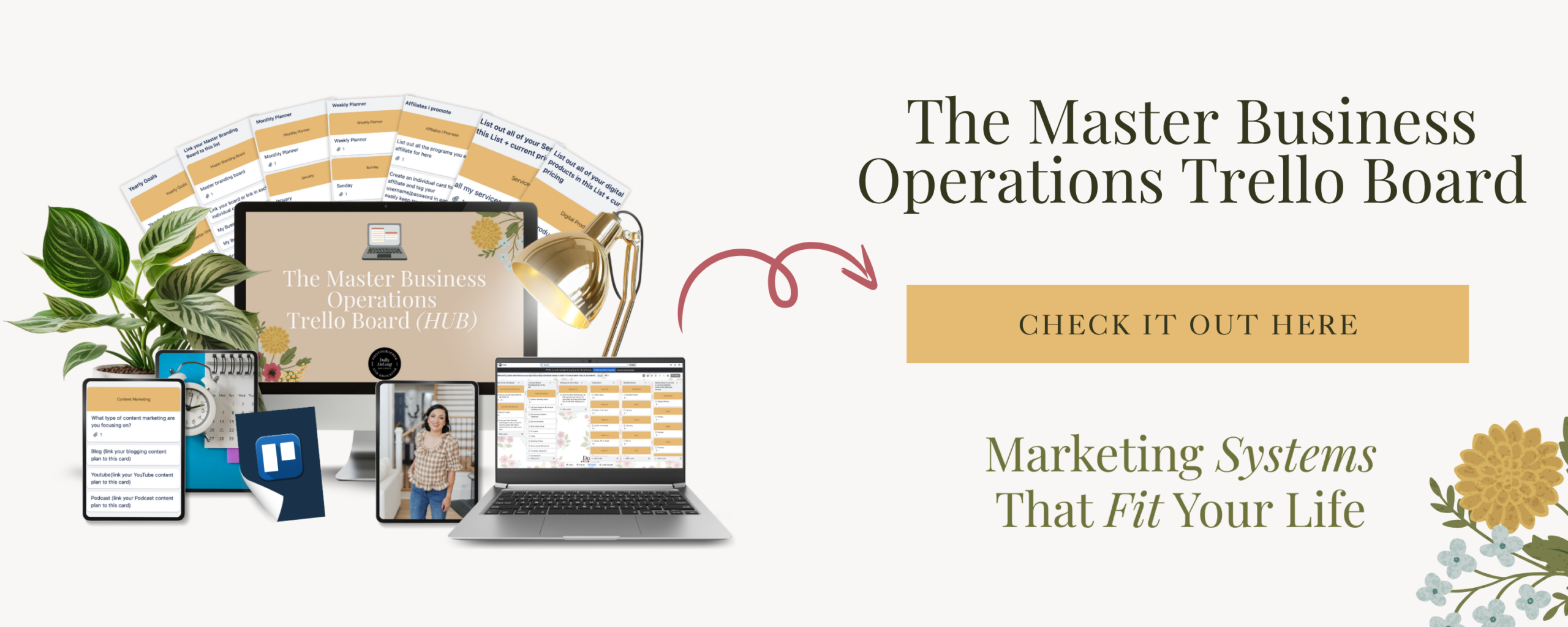
If you love a good checklist and you want a visual system for organizing all of this, the Backend Organization System (Trello Board) was built for exactly this kind of project planning.
What Tech Stack Do You Need to Launch a Digital Product?
You need a project management tool, a checkout and payment processor, an email marketing platform, and optionally an automation connector like Zapier to tie them together.
One of the biggest traps I see family photographers fall into is believing they need 10 different platforms before they can launch anything. Brooke was blunt about this during our conversation: You do not need 17 tools to have a successful launch. You need the right tools working together, and you need to keep your setup lean.
Here is what a clean, minimal launch tech stack looks like:
- Project management: A Google Doc, Trello board, or ClickUp workspace to map your launch tasks and deadlines. If it is just you, even a paper planner works. The point is having one place where every task lives.
- Checkout and payment processing: ThriveCart is a strong option because it supports one-time purchases and integrates natively with most email platforms. But if you already have another processor, use it.
- Email marketing: Whether you use Flodesk, Kit, or ActiveCampaign, your email platform is where your nurture sequences, launch emails, and delivery emails live. This is non-negotiable.
- Automation (optional but worth it): Zapier connects your checkout to your email platform, your CRM, your Google Drive, and more. It saves you from manually doing repetitive tasks during a launch when your brain is already maxed out.
Brooke’s pro tip, which I repeat to every photographer I coach: audit your tech stack every 6 months. Cancel what you are not using. Brooke canceled six tools in one audit and saved $1,500 for the year. That is real money back in your business.
If you are still building your tool kit, my Business Tools page has all of my recommended platforms with affiliate discounts.
How Should You Use Automation During a Launch?
Use automation to handle repetitive delivery, follow-up, and tracking tasks so you can focus your limited time on showing up, selling, and serving your buyers.
Automation is not about building something complicated. It is about making sure nothing falls through the cracks when you are juggling a launch alongside client sessions and, you know, life.
Three places to start with launch automation:
Email sequences. Set up a welcome sequence that triggers when someone makes a purchase. This should include a confirmation email, a “here is how to access your product” email, and a check-in email a few days later. All automated. All happening while you are editing a gallery or picking up your kids from school.
Client onboarding. If your digital product includes any community, coaching call, or membership access, automate the onboarding process. Brooke recommends using Zapier to automatically create a Google Drive folder for each new buyer, add them to an internal tracking spreadsheet, and tag them in your email platform.
Follow-up touchpoints. This is where most solo photographers drop the ball, and it is the part that matters most for repeat buyers. Brooke maps out automated check-in emails at 3, 6, and 9 months for longer programs. Even for a simple digital product, a single follow-up email 30 days after purchase asking “How is it going?” can lead to testimonials, referrals, and repeat sales.
Start with one automation. Test it. See how much time it saves you. Then add another. You do not have to automate everything on day one.
If you want a full CRM system to manage this, Dubsado is my go-to recommendation. You can get 30% off with my affiliate link and set up automated workflows for your entire client and buyer experience.
Why Is Client Experience the Most Important Part of Your Launch?
Client experience is the most important part of your launch because how someone feels after buying from you determines whether they buy again, refer others, or leave a testimonial.
Brooke said something during our conversation that stopped me mid-note-taking: “How you engage with clients post-purchase determines whether they will buy from you again.” That sentence should be taped to every photographer’s monitor.
Your launch does not end when someone clicks “buy.” It starts a new relationship. And if that relationship feels impersonal, confusing, or neglected after the sale, you have lost a future customer.
Here is what a strong post-purchase client experience looks like:
Your buyer clicks purchase. They immediately receive an email with clear instructions on how to access what they bought. No confusion, no hunting through spam folders. Within the first week, they get a short check-in email. For a longer program or membership, you schedule automated touchpoints at regular intervals. At the end of the experience (or 30 days after purchase for a standalone product), you send a feedback request and a testimonial ask.
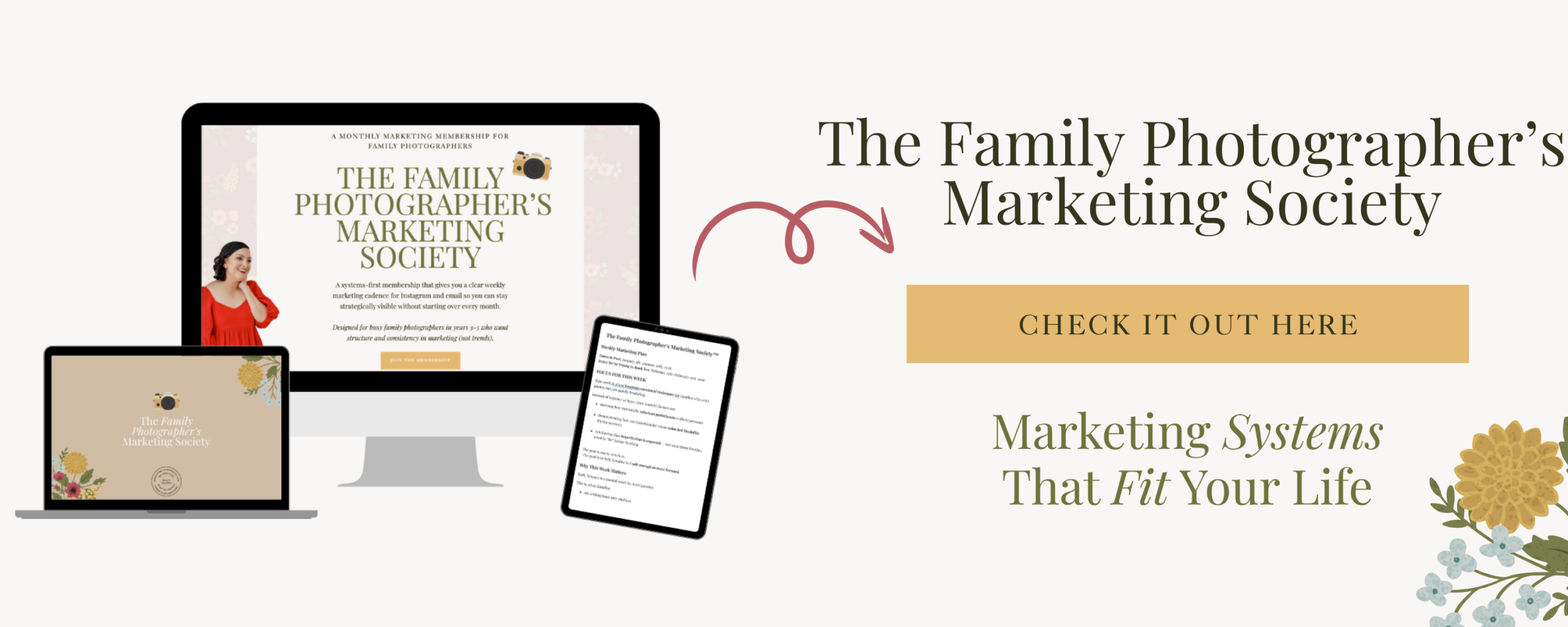
None of this has to be manual. All of it can be automated. But it has to exist. The photographers I work with inside The Family Photographer’s Marketing Society build these post-purchase sequences into their marketing plans so nothing gets forgotten.
What Is the Best Way to Start Planning Your Next Launch?
The best way to start planning your next launch is to pick your cart open and close dates, reverse engineer your timeline, and audit your current tech stack before creating a single piece of content.
If you have been putting off launching a digital product because the whole process feels too big, here is your permission to start small. Pick one product. Set one launch date. Work backward. Audit what you already have. Add one automation. Focus on the buyer experience.
You do not need a massive audience, a fancy website, or a 15-tool tech stack. You need a plan, a few solid systems, and the willingness to follow through.
Your next steps:
- Listen to the full episode: Episode 115 of the Systems and Workflow Magic Podcast for the complete conversation with Brooke Scott (which is embedded above)
- Grab a planning tool: The Backend Organization System (Trello Board) provides a plug-and-play project board to organize your day-to-day tasks.
- Join the membership: The Family Photographer’s Marketing Society gives you weekly marketing plans so you stay visible between launches and build the audience that makes your next launch event (for your mini sessions) profitable.
- Get your blogging system in place: The Blogging and Organic Visibility System helps you create SEO content that drives traffic to your offers long after launch week is over.
Connect With Brooke
Frequently Asked Questions About Launching a Digital Product
How far in advance should I start planning a digital product launch? Most solo photographers need 6 to 12 weeks of lead time for a well-planned launch. This includes time for content creation, email sequence writing, tech setup, and pre-launch visibility. If it is your first launch, lean toward the longer end of that range.
Do I need a large email list to launch a digital product successfully? No. A smaller, more engaged list will outperform a larger, less engaged one every time. Focus on building trust through consistent content (like blogging and email newsletters) so the people on your list are ready to buy when you open the cart.
What is the most important tool for launching a digital product? Your email marketing platform. It handles your nurture sequences, launch emails, delivery emails, and post-purchase follow-ups. Everything else supports this.
Can I launch a digital product as a solo business owner with no team? Yes. Brooke Scott and I both started as solo operators. The key is keeping your launch lean, automating what you can, and giving yourself a realistic timeline instead of trying to do everything in one week.
How do I know if my tech stack is too complicated? If you are paying for tools you have not logged into in 60 days, or if two platforms do the same thing, your stack is too heavy. Audit it every six months and cut what is not earning its keep.
DID YOU LIKE THIS EPISODE? PLEASE SHARE IT ON PINTEREST!
Meet Your Favorite Marketing Strategist and Business Coach for Family Photographers (Dolly DeLong Education)

Hi, I’m Dolly DeLong, a Nashville-based family photographer, marketing strategist, and systems educator for family photographers who want structure, clarity, and consistency in their marketing.
My photography journey began in 2006, and over the years, I built a sustainable family photography business while navigating motherhood, client work, and the realities of running a solo creative business. Along the way, I discovered something unexpected: I loved the backend just as much as the creative side.
What started as organizing my own workflows turned into helping other family photographers simplify their marketing, build repeatable systems, and stop relying on last-minute posting or panic marketing.
Today, I focus exclusively on helping family photographers intentionally market their businesses (not with trends but with consistently showing up).
I offer two ways to work with me:
-
The Family Photographer’s Marketing Society: a systems-first membership that provides a clear weekly marketing cadence for Instagram and email, so you always know what to focus on without starting over.
-
1:1 Strategic Marketing Support for established family photographers who want hands-on guidance in building a sustainable, SEO-supported marketing system.
Through my blog, podcast, and YouTube channel, I teach family photographers how to think like marketers, plan ahead, and create marketing rhythms that support both their business and their family life.
I still photograph families around Nashville because it’s one of my greatest joys. But helping family photographers build calm, consistent marketing systems that actually fit real life is a close second.
I’m so glad you are here, reading this blog, listening to the podcast, or watching the embedded YouTube video. I hope this educational content was helpful. Please let me know what future systems content you would like me to create!
more on me • more on me

More about dolly
Hi, I’m Dolly — a family photographer, marketing strategist, and systems & workflow educator for family photographers who want to find joy (and order) in their business again. Because I still work behind the camera, I understand firsthand how overwhelming the backend of a creative business can feel.
With my launch-strategist brain and a deep love for simple systems, I help photographers build intentional marketing rhythms and workflows that make it easier to show up consistently, attract the right clients, and actually enjoy running (and marketing) their business.
Through my blog, podcast, and YouTube education, I share actionable steps, real talk, and encouragement — all rooted in faith and intention — to help you bring clarity and confidence to your marketing and everyday systems. Because sustainable growth isn’t built on hustle or speed, but on thoughtful planning, consistency, and care.
part cheerleader. part systems guide.
But all dolly.
I'm Dolly

Watch now
This training covers the elements you should include in your photography business contact form.
How to create a contact page that WOWS & converts
no 03. | free training

Download now
Access my exact checklist I use to create my mini sessions every year in Dubsado
The Dubsado
Mini-Session Master Workflow Checklist
no 02. | DOWNLOAD

Get the free guiide
These evergreen posts build confident & consistent marketing
5 Instagram posts every family photographer should be sharing
no 01. | download