
Email Nurture Sequence for Family Photographers: Turn Downloads Into Fans
You finally finished it. The lead magnet is done, the landing page is live, and subscribers are actually opting in. YES. That is huge. But here is the part that trips up so many family photographers: what happens next? If your answer is “they get the freebie and then… nothing,” we need to talk. Because that freebie is just sitting on a digital shelf collecting dust, and your future client has already forgotten your name. This post will walk you through exactly how to set up a simple, effective email nurture sequence that follows your lead magnet, builds trust with your subscribers, and eventually converts them into paying clients or customers. Email marketing expert Amanda Stores joined me on the Systems and Workflow Magic Podcast to break this down, and OH M GEEEE, did she deliver. Pull up your email marketing platform of choice and get ready to take notes. What you will learn in this post:
- Why a nurture sequence is the missing puzzle piece after your lead magnet
- What emails to include (and in what order)
- How to space your emails without overwhelming your list
- What to do when the nurture sequence ends
- Why even a list of 20 people deserves your best effort
Want to grab a freebie to help you get started? Snag the Lead Magnet Master Idea List here and make sure your opt-in is something worth emailing about.
🎙️Listen to the podcast here (or scroll down to read the blog post)
Why Does Email Marketing Even Matter for Family Photographers?
For every dollar spent on email marketing, there is a $36 return on investment. That number is not a typo. Think about it this way: if your ideal client opens Instagram right now, she is competing with content from over 1,000 accounts she follows. But if she opens her inbox, she sees maybe 15 to 20 emails. Your message is not fighting the algorithm. It is sitting right there, asking to be read. Email marketing is the most direct line of communication you have with your people, because they chose to be there. They did not just hit a casual follow button. They handed over their name and email address, which Amanda Stores compares to giving someone your phone number in the 90s. That was a big deal. Treat it like one. The goal of a nurture sequence is not to sell immediately. The goal is to help your subscriber actually use the freebie they downloaded, see the value in what you do, and start to trust you before you ever ask them to spend a penny.
What Is an Email Nurture Sequence?
A nurture sequence is a series of pre-written, automated emails sent to a new subscriber right after they download your lead magnet. It runs on autopilot and is designed to deliver your freebie, encourage your subscriber to actually consume it, share your story, and build a real relationship before any sales happen. It is different from a newsletter (which is ongoing), a welcome sequence (which introduces your business more broadly), and a sales sequence (which converts). The nurture sequence is the very first handshake.
What Emails Should Be in a Lead Magnet Nurture Sequence?
A solid lead magnet nurture sequence has 3 to 5 emails and covers four main jobs: deliver, relate, share, and socially prove.
Email 1: Deliver the Freebie. This one is short. Like, really short. One or two paragraphs max. No one wants to read a novel when they are just trying to get the thing they signed up for. Your only job here is to deliver what you promised. Include the link or the attachment, and keep the excitement genuine but brief. This email builds trust immediately because you did what you said you would do.
Email 2: Tell the Story Behind It. This is where you start building a real relationship. Why did you create this freebie? Who is it for? What problem were you trying to solve when you put it together? Your subscriber needs to read this and think, “She made this for me.” That moment of recognition is where loyalty starts. Make it personal, specific, and conversational.
Email 3: Encourage Them to Share It. This one is clever, and not enough people use it. Instead of asking your subscriber to forward the PDF (which means you lose the email capture), you ask them to share the link to your opt-in form. Something like: “If you have a photographer friend who would love this, could you send them this link?” Now their friends sign up too. The key here, as Amanda points out, is that you have to have created something good enough that people want to share it. If your freebie is a three-line checklist you threw together in 15 minutes, this will not work. But if you put real thought and effort into it, your subscribers will want their people to experience it too.
Email 4: Social Proof Name a real person (with permission, or a composite example) who used your freebie and got a result. “Sarah downloaded this PDF and felt so overwhelmed that she broke it into one page per day. By week two, she had her whole booking process mapped out.” That kind of relatable, specific story shows your subscriber that this resource works in real life, not just in theory.
Email 5 (Optional): Reminder and Resource. Some photographers include a fifth email that gently reminds the subscriber where to find the freebie again, especially for longer PDFs or mini-courses. You can also use this email to point them to a helpful podcast episode, blog post, or related resource. This is a great place to include an internal link to something you want them to read next.
How Far Apart Should You Space Your Nurture Emails?
One day apart per email is a solid starting point, and you can always tweak from there. The biggest mistake photographers make when building their first automation is forgetting to add time delays between emails. You build all five emails, feel proud and excited, and forget that every subscriber will receive all five in the same hour if no delay is set up. That is a fast track to getting unsubscribed. Set a 1-day delay between emails, and you are in good shape. One caveat: if someone subscribes to multiple freebies at the same time, they may end up in several automations simultaneously. Do not copy and paste the same email into multiple sequences. Each sequence should have its own unique emails tailored to that specific opt-in. Yes, this takes more time upfront. But having a subscriber get the same email twice in two days is a really great way to lose them. Ready to set up your email marketing system? Grab 25% off Flodesk here and start your first automation without the overwhelm. 
What Happens When the Last Nurture Email Sends?
After your nurture sequence ends, you have a few options depending on where you are in your business. If you only have a nurture sequence right now, funnel your subscribers into a weekly or biweekly newsletter. Consistency over perfection here. Even emailing a list of 20 people matters, and staying top of mind is the whole point. If you have built more sequences, Amanda recommends funneling subscribers through a welcome sequence next. This is where they learn more about you, your story, and the broader world of your business. Think of the nurture sequence as the first date, and the welcome sequence as the part where they actually decide if they want to keep seeing you. After the welcome sequence, if you have a product to sell, a sales sequence can come next. This is where the conversion happens. But here is the thing: by the time they get to the sales sequence, they already know you, trust you, and have been delivered real value. You are not cold-pitching. You are inviting someone who already likes you to take the next step. The newsletter is the long game. It keeps you top of mind for the people who are not ready to buy yet, and it is where you tuck in a PS link to your offer every single time: “P.S. If you are ready to get your marketing systems in place, check this out.” They may not click it for six months. And then one day they will.
A Pep Talk for the Photographer With a List of 20 People
If you are reading this and thinking, “This is great, but I only have 15 subscribers and three of them are my mom and my best friend,” I want you to sit with this for a second. Put 20 people in a room and look around. That is a lot of people who chose to be there. Every single email address belongs to a real human with a real story, real problems, and a real photography budget. You have the opportunity to show up for them consistently, and that is not nothing. Amanda Stores had 350 subscribers for five years before she saw real growth. She was testing on her husband (same, Amanda, same) and learning the platform. That consistency and that practice built the foundation for everything that came after. Test your own sequence. Send it to yourself. Have a trusted friend opt in and tell you what she thinks. Tweak what is not working. Keep what gets replies. Email marketing is a long game, and it rewards the photographers who show up consistently, not perfectly.
A Note on GDPR and Email Compliance
Before you build out any of this, make sure your landing page includes a terms and conditions policy and a privacy policy at the bottom. When someone submits their name and email address, they should know they are agreeing to receive emails from you. This is part of GDPR compliance, and it is not optional. Do not take contacts from your Gmail or CRM and add them to your email list without their consent. They did not sign up. You need people who actively choose to hear from you. That is what a lead magnet is for. If you need solid legal templates for your photography business, check out The Legal Paige and use code DOLLY10 for 10% off. 
Your Email Nurture Sequence: Start Simple, Build From There
Here is the takeaway, plain and simple. You do not need a 12-email sequence on day one. You need four to five emails that deliver your freebie, share your story, encourage sharing, and show social proof. You need a 1-day delay between each email. And you need to just start. Pick the simplest email marketing platform you can afford, build your first sequence, and send it to yourself. When it feels good, open it up to the world. You will tweak it. You will improve it. And one day, a subscriber will reply and say, “This is exactly what I needed,” and you will realize that the list of 20 was always worth it.
Grab the Lead Magnet Master Idea List to make sure your opt-in is worth emailing about.
And if you want to build the backend of your entire opt-in system, check out the Blogging and Organic Visibility System for Family Photographers so your marketing runs on repeat without you reinventing the wheel every single week.
FAQ: Email Nurture Sequences for Family Photographers
How many emails should be in a nurture sequence? A lead magnet nurture sequence should include 3 to 5 emails. Start with delivery, add story and social proof, and end with an encouragement to share.
How often should I send emails in a nurture sequence? One email per day with a 24-hour delay between each is a reliable starting point. Adjust based on your audience’s engagement over time.
What comes after a nurture sequence? After the nurture sequence, funnel subscribers into a welcome sequence to introduce your business more broadly, then into a sales sequence if you have a product to offer.
Do I need a double opt-in? Double opt-in is required in some countries. If you are in the US, it is optional, but it does result in a more engaged list. The tradeoff is lower conversion on the form itself.
What email platform should family photographers use? Flodesk is a great option for photographers who want beautiful, on-brand emails without a steep learning curve. Get 25% off here.
Meet Your Favorite Marketing Strategist and Business Coach for Family Photographers (Dolly DeLong Education)
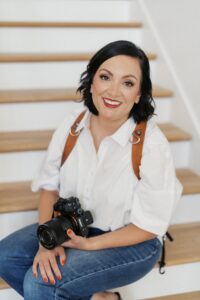
Hi, I’m Dolly DeLong, a Nashville-based family photographer, marketing strategist, and systems educator for family photographers who want structure, clarity, and consistency in their marketing.
My photography journey began in 2006, and over the years, I built a sustainable family photography business while navigating motherhood, client work, and the realities of running a solo creative business. Along the way, I discovered something unexpected: I loved the backend just as much as the creative side.
What started as organizing my own workflows turned into helping other family photographers simplify their marketing, build repeatable systems, and stop relying on last-minute posting or panic marketing.
Today, I focus exclusively on helping family photographers intentionally market their businesses (not with trends but with consistently showing up).
I offer two ways to work with me:
-
The Family Photographer’s Marketing Society: a systems-first membership that provides a clear weekly marketing cadence for Instagram and email, so you always know what to focus on without starting over.
-
1:1 Strategic Marketing Support for established family photographers who want hands-on guidance in building a sustainable, SEO-supported marketing system.
Through my blog, podcast, and YouTube channel, I teach family photographers how to think like marketers, plan ahead, and create marketing rhythms that support both their business and their family life.
I still photograph families around Nashville because it’s one of my greatest joys. But helping family photographers build calm, consistent marketing systems that actually fit real life is a close second.
I’m so glad you are here, reading this blog, listening to the podcast, or watching the embedded YouTube video. I hope this educational content was helpful. Please let me know what future systems content you would like me to create!
Leave a Reply
more on me • more on me

More about dolly
Hi, I’m Dolly — a family photographer, marketing strategist, and systems & workflow educator for family photographers who want to find joy (and order) in their business again. Because I still work behind the camera, I understand firsthand how overwhelming the backend of a creative business can feel.
With my launch-strategist brain and a deep love for simple systems, I help photographers build intentional marketing rhythms and workflows that make it easier to show up consistently, attract the right clients, and actually enjoy running (and marketing) their business.
Through my blog, podcast, and YouTube education, I share actionable steps, real talk, and encouragement — all rooted in faith and intention — to help you bring clarity and confidence to your marketing and everyday systems. Because sustainable growth isn’t built on hustle or speed, but on thoughtful planning, consistency, and care.
part cheerleader. part systems guide.
But all dolly.
I'm Dolly

Watch now
This training covers the elements you should include in your photography business contact form.
How to create a contact page that WOWS & converts
no 03. | free training

Download now
Access my exact checklist I use to create my mini sessions every year in Dubsado
The Dubsado
Mini-Session Master Workflow Checklist
no 02. | DOWNLOAD

Get the free guiide
These evergreen posts build confident & consistent marketing
5 Instagram posts every family photographer should be sharing
no 01. | download



[…] to the series Week 1 Week 2 Week 3 Week 4 Week […]